Protocol Archives • Browse all War titles in HD

During early World War II, a Danish sea captain, delayed in a British port, tangles with German spies.


1917, Yakutia. 9-year-old Mikita is growing up beyond his years, as he, along with adults, learns the difficult life of a Yakut cattle breeder, where every day is a struggle for survival. New challenges await the boy, as the events of the revolutionary, rebellious time violently invade the traditional way of his family, violating the values and way of life that have been established for centuries.
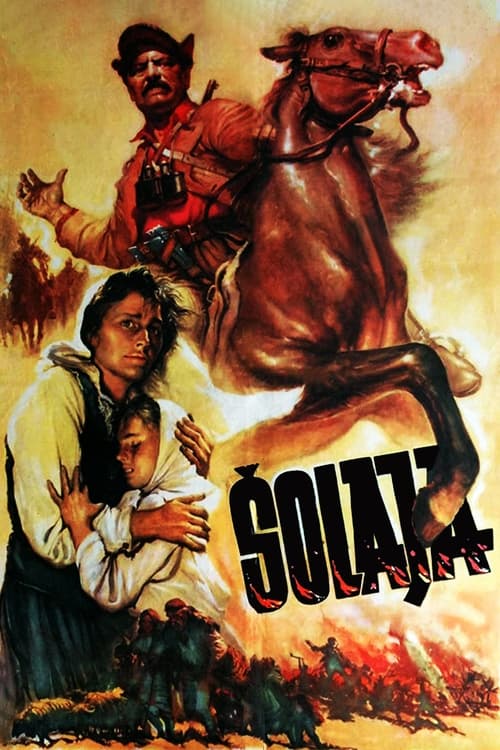
Life of Simo Šolaja (1905-1942), a Yugoslav partisan national hero from Bosnia.

Two friends in the Korean Navy, Lee and Kim are both part of an elite diving squad, specialising in emergency deep sea salvage dives. Lee is straight-laced and takes his duties seriously, while Kim treats the Navy as a lark. When Kang, a diving instructor and Kim's former girlfriend, is posted to the unit, this creates tension between the friends as they compete for Kang's affections. The tension is heightened when Lee is promoted ahead of Kim, creating a rivalry between the two. Kim's gung-ho approach to diving, and the danger he poses for himself (and his fellow divers), leads to further problems. Matters come to a head when an incident at sea causes the sinking of a submarine, requiring the unit to attempt a dangerous salvage rescue of the sunken submarine.

In 1944, in Paris, the leader of a resistance network is looking for the traitor who gave away a radio operator.
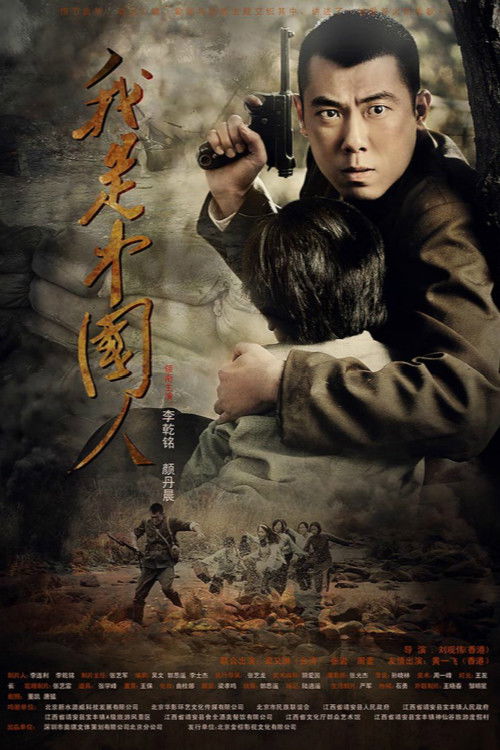
During WWII, Taiwan was occupied by Japan. Hai Sheng, a young man from Taiwan, was deeply influenced by Japanese militarism. He enthusiastically joined the Japanese vanguard and went to the mainland China to participate in the war together with his foster-brother, Yamamoto Ichiro. However, when he witnessed the atrocities of the Japanese army killing Chinese civilians, he only wanted to escape back to his hometown. On the way back home, Hai Sheng met four girls including Ning Yu. Forced by desperation, Hai Sheng agreed to send them to the occupied Nanjing city. Along the way, Hai Sheng not only had to protect the four girls, but also avoided the pursuit of Yamamoto Ichiro, the captain of the vanguard team. In the end, among the four girls, only Sakurako (Ying Zi), who was of Japanese descent, survived. When Ying Zi also saw the true face of the Japanese soldiers, Hai Sheng decided to work hard to cover Ying Zi to break out of the Japanese army camp.

Dramatizes, in an official Soviet government release, the rise of the Red Army and the revolution that they eventually won.

Admiral McKee is retired, when following the events of 9/11 he receives a call from the White House informing him that his commander in chief requires him to serve his country once again. Shortly after this he is sworn into office as a senior member of the Office of Homeland Security under Tom Ridge. Once in office Admiral McKee faces the challenge of organizing this new office so as to prevent further terrorist attacks against the United States. With this in mind, Admiral McKee's wife recommends he speaks to his friend, NSA Agent Sol Binder.

After the Battle of Lipany, the remnants of the Hussite troops concentrated under the leadership of Jan Roháč of Dubé at Sion Castle. However, he had no prospects of victory against the soldiers of the Lordship. Sion was conquered, Roháč of Dubé was captured and executed as a pest in Prague on September 9, 1437.
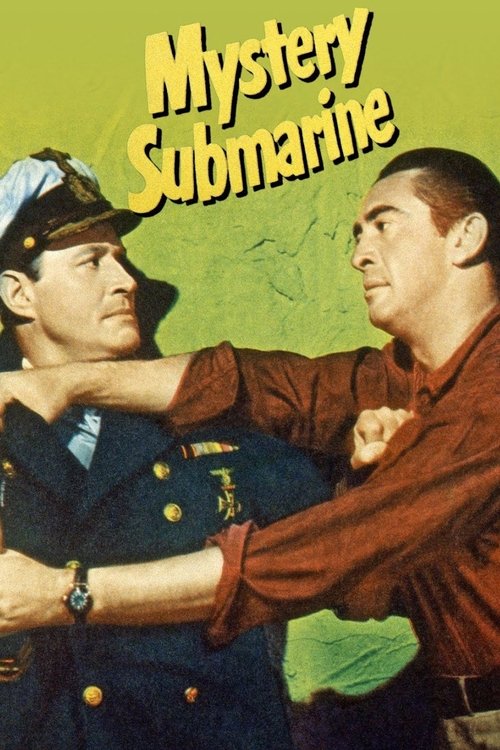
Posing as an ex-German medical officer, a U. S. Navy Intelligence Officer sets out to rescue a kidnapped scientist, and sink a Nazi submarine, hiding off the coast of South America.

A film about disarmament.
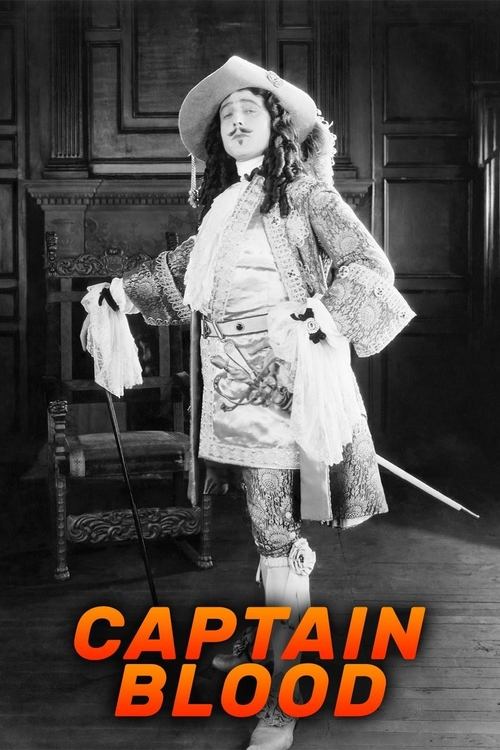
Young Irish physician Peter Blood is exiled as a slave to Barbados, where he and his friend Jeremy are purchased by Colonel Bishop at the behest of his niece Arabella. With other slaves he captures a Spanish galleon and becomes the terror of the Caribbean privateers until offered a commission in the English Navy. He defeats the French at Port Royal, and as a reward he is named governor of Jamaica and marries Arabella.

In the midst of the ongoing conflict in Afghanistan and Pakistan, a gifted child makes an extraordinary effort for his people.

It is a dramatization about Major Kim Man-il's service during the Korean War. The Korean forces dispatch two military units to defend the Baeti Heights led by Kim. Although it is hard to do so, Kim and his senior, Kim Mu-cheol (Choe Bong), and other soldiers do their best. Kim even risks his life to save his juniors, but many die as the enemy forces approach. Meanwhile, Lee Kang-no (Yun Il-bong), a communications officer, reads a letter from his wife - missing her and his daughter. Encouraged by it, Lee risks his life to make successful communication between his military unit and the headquarters. His unit wins. Commander Kim Man-su gathers a small number of his subordinates because many had died, and encourages them to do their best toward the enemy off.

Six Māori Battalion soldiers camped in Italian ruins wait for night to fall. In the silence, the bros-in-arms distract themselves with jokes. A tohu (sign) brings them back to reality, and they gather to say a karakia before returning to the fray. Director Taika Waititi describes the soldiers as young men with "a special bond, strengthened by their character, their culture and each other.

"Andremo in città" (We'll Go to the City) is a 1966 Italian drama film directed by Nelo Risi. It is based on the novel of the same name by Edith Bruck, Risi's wife. Bruck, a Hungarian concentration camp-survivor, settled in Italy after the Second World War and wrote about her experiences in autobiographical and fictional formats.[1] The film stars Geraldine Chaplin and Nino Castelnuovo.
Over 6,000 men served and 19 fell in the Congo Battalion (1960-64), Sweden's most dramatic and contentious UN operation. Many of the participants have borne the experience as a lifelong, well-hidden trauma. A visit to the Congo after fifty years causes some of them to finally open up and tell the things that they haven't even been able to say to their closest family.
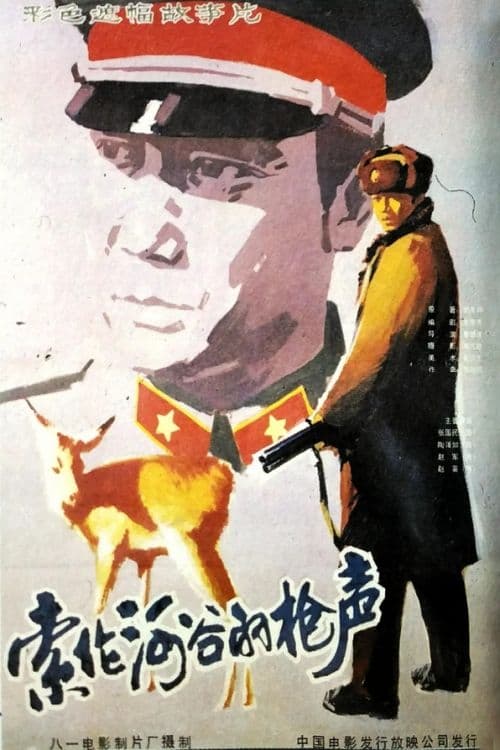

The film is set during World War II in a German-occupied European country. In a covered truck on a snow-covered road, the Germans are transporting a group of civilians. Thoughts of imminent death inevitably visit the passengers of the van. The Catholic priest accompanying the arrested, among whom there is a boy, prepares the companions to leave for another world. A complex psychological conflict arises between the priest and the boy. Circumstances develop in such a way that the boy manages to escape.