Protocol Archives • Browse all Action & Adventure titles in HD

In this intense obstacle course series, elite athletes from the U.S. and other countries compete for cash prizes, individual glory and national pride.

The Legend of Lu Xiaofeng is a 2006 television series adapted from Gu Long's Lu Xiaofeng novel series. The series was first broadcast on CCTV-6.

Drama series about an ex-policeman, who now uses his detective skills while working for insurance companies.
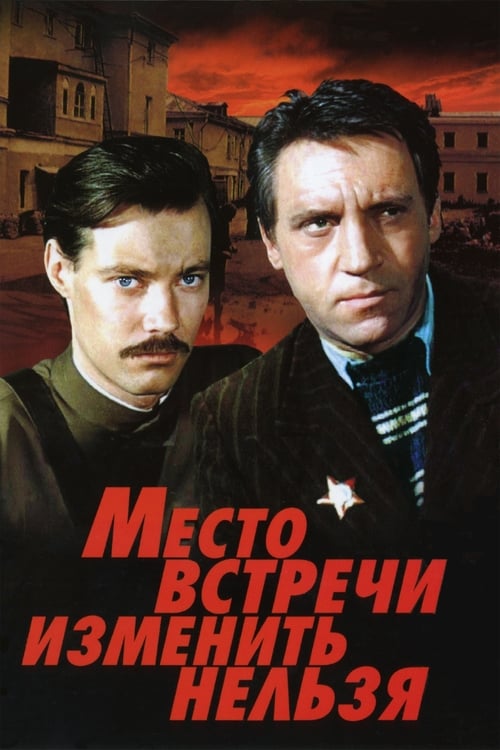
After WWII is over, a young officer Volodya Sharapov returns to Moscow to work in MUR - Moskovskiy Ugolovny Rozysk (Moscow Criminal Police). There he meets Gleb Zheglov who is a chief of a squad which fights organized crime. Their main task is to track down a gang "Chernaya Koshka" (Black Cat) which terrorizes the city. Also, they have to find out who murdered Larisa Gruzdeva. Zheglov believes it was her husband Ivan Gruzdev, but Sharapov has his doubts about it...

As the title implies, this series features a pair of characters per episode. Each DVD has one music video for each character, plus one part of an eight part story. Annoyingly, the music videos are for the short versions of the songs, not the full versions... to get those, you had to buy the Twin Collection CDs.

In a world where exams decide your fate, two students clash—one cheats, one studies. The exam hall becomes a warzone.
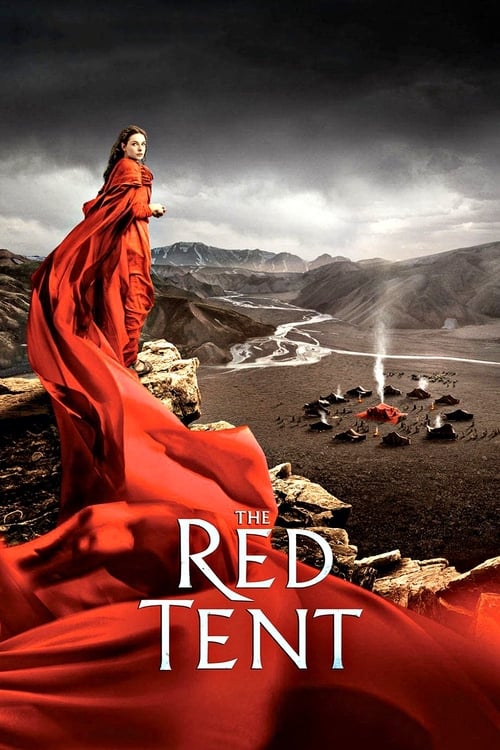
Her name is Dinah. In the Bible her life is only hinted at during a brief and violent detour within the more familiar chapters about her father, Jacob, and his dozen sons in the Book of Genesis. Told through Dinah's eloquent voice, this sweeping miniseries reveals the traditions and turmoil of ancient womanhood. Dinah's tale begins with the story of her mothers: Leah, Rachel, Zilpah, and Bilhah, the four wives of Jacob. They love Dinah and give her gifts that are to sustain her through a hard-working youth, a calling to midwifery, and a new home in a foreign land. Dinah tells us of the world of the red tent, the place where women were sequestered during their cycles of birthing, menses, and illness; of her initiations into the religious and sexual practices of her tribe; of Jacob's courtship with his four wives; of the mystery and wonder of caravans, farmers, shepherds, and slaves; of love and death in the city of Shechem; of her half-brother Joseph's rise in Egypt, and of course her marriage to Shechem and it's bloody consequences.

SO TSAN, better known as Beggar So, is one of the ten best Kung-Fu maters known in Canton, the ‘Canton Ten Tigers‘, in the 1920's. His legendary life unfolds when he is falsely accused to have killed his father, also a renowned Kung-Fu master, who actually died of stimulant overdose. Ling, his lover, sacrifices her own virtue to the Commander in order to save him from prosecution. But TSAN, being unaware of her true intention, mistake her as flirting around. With a broken-heart, he goes downtown to start a new life. He, working in concert with his good friends, manages to set up a Kung-Fu school in Canton. The series mounts to a new climax when TSAN, just about to marry another girl YING, gets to know that LING sacrificed all for his sake. On the other hand, LING, deeply hurt from being misunderstood, is requested by QUAN, TSAN’s best friend, for marriage. The story continues with the intricate relationship among the four...

Ten years have passed since Goku left his friends and family to hone his skills. But Goku soon finds himself helpless against the mystical power of the Dragon Balls and an accidental wish made by the devious Emperor Pilaf. The wish; that Goku once again become a child! Goku, together with Trunks, and his own granddaughter Pan, blast off into the outer reaches of space in search of the mysterious Black Star Dragon Balls. But these Dragon Balls have a fatal secret: if not collected within one year Earth will be destroyed.

In a modern society where top spinners are popular around the world, Somewhere in Seoul, South Korea. Shin, a sixth-grader, enjoys top spinner battles even though he always loses. Shin is targeting his older brother Doyle, an outstanding top spinner player. Meanwhile, my brother finished the final of the Top Spinner World Championship. Suddenly loses consciousness for unknown reasons. Doyle was on his way home when he was approached by a mysterious boy. Doyle had his mental body taken away... Doyle's mental body wanders alone in a dimension other than Earth. It is a world where top spinners have been weaponized. The top spinner and the army of holy beasts within it were running rampant. Meanwhile, if you show Doyle something he wants most, The doctor said he might come to his senses. God vowed that he would show his brother the trophy. Compete against various rivals with the goal of winning the World Championship.

Faced with imminent extinction, and guided by a mysterious handheld black box, the surviving members of an alien race of small people - Nomes - embark upon a quest to find a new home, safe from the unwelcome attentions of us destructive humans...

Eken Babu is not your average, middle-aged Bengali man. He is Ekendra Sen, a detective extraordinaire who effortlessly cracks complex cases in his own quirky style. And wherever a mystery takes him, he is accompanied by his friends, Bapi and Pramatha.

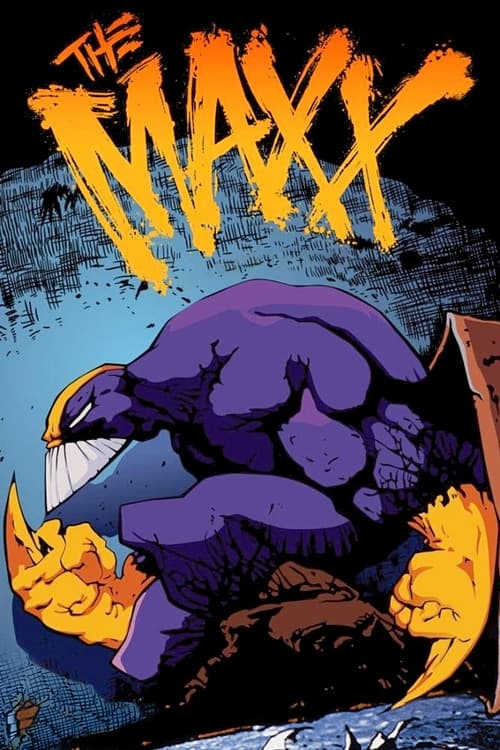
Maxx is a purple-clad superhero living in a cardboard box. His only friend is Julie Winters, a freelance social worker. Maxx often finds himself shifting back and forth between the "real" world and a more primitive outback world where he rules, and protects Julie. Mr. Gone, a self-proclaimed "student of the mystic arts" seems to know more about Maxx and Julie and their strange relationship than they could ever guess, but he's not exactly telling all....not yet, anyway.

Follow Jason Momoa as he travels the country chasing art, adventure, and friendship through the lens of craftsmanship.

Leo the Lion is a sequel to the Japanese-American co-produced series "Jungle Emperor", or Kimba the White Lion. Osamu Tezuka had always wanted his story of Kimba to follow Kimba's entire life, and the Jungle Emperor/Kimba series was such a hit in Japan that Dr. Tezuka produced a sequel, without his American partners, in 1966. Making the series without a co-producer gave him complete creative control. For example, Dr. Tezuka changed the conclusion of his original manga story to a happy ending. Leo the Lion does not follow immediately from the end of the Kimba series. Instead, the story begins a couple of years following the end of the previous series. To English-speaking audiences, the behavior of the title character is inexplicably out of line with what was established in the first series. At the end of the first series, in the original Japanese script, Kimba promises to keep his animals separate from humans. It is this promise that drives the seemingly hermit-like Leo in this series. As the series unfolds, the focus shifts from the title character to one of his cubs, the male named Rune. This series as a whole is about Rune's growth, from a whining weakling to a confident leader.

From the creator of Projek: Anchor SPM comes High Council. The story of troubled student Fakhri on a mission to end bullying and injustices in his elite boarding school by dismantling the High Council.

Daitetsujin 17 is a 1977 tokusatsu series created by Shotaro Ishinomori and produced by Toei. It revolves around a giant battle robot commanded by a young boy who fights the giant robots of an evil organization bent on world conquest. It is similar to Giant Robo in premise and how it ends.

The adventures of the intrepid Spirou, accompanied by his reporter friend Fantasio and his squirrel Spip.

The seven short films making up GENIUS PARTY couldn’t be more diverse, linked only by a high standard of quality and inspiration. Atsuko Fukushima’s intro piece is a fantastic abstraction to soak up with the eyes. Masaaki Yuasa, of MIND GAME and CAT SOUP fame, brings his distinctive and deceptively simple graphic style and dream-state logic to the table with “Happy Machine,” his spin on a child’s earliest year. Shinji Kimura’s spookier “Deathtic 4,” meanwhile, seems to tap into the creepier corners of a child’s imagination and open up a toybox full of dark delights. Hideki Futamura’s “Limit Cycle” conjures up a vision of virtual reality, while Yuji Fukuyama’s "Doorbell" and "Baby Blue" by Shinichiro Watanabe use understated realism for very surreal purposes. And Shoji Kawamori, with “Shanghai Dragon,” takes the tropes and conventions of traditional anime out for very fun joyride.