Protocol Archives • Browse all Warner Bros. Pictures titles in HD

Dooley and Sales vaudeville act 'Dooley's the Name'.
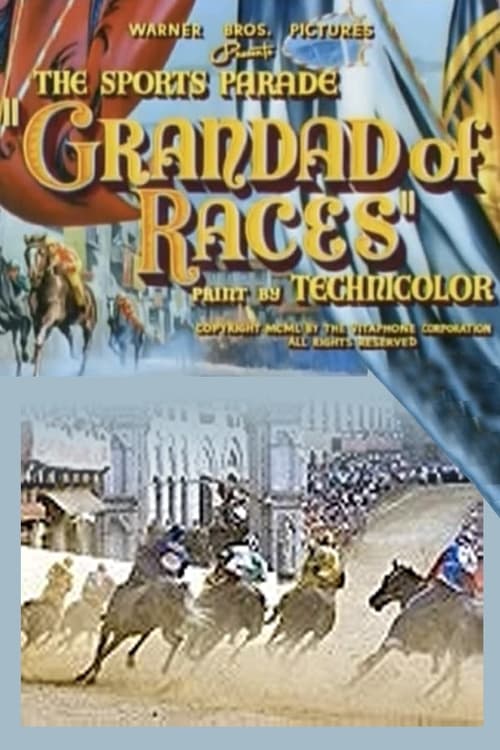
Grandad of Races is a 1950 American short documentary film about the Palio di Siena held in the Piazza del Campo in Siena, directed by André de la Varre. It won an Oscar at the 23rd Academy Awards in 1951 for Best Short Subject.

The film consists of Bert Swor in black-face pretending to be a black preacher.

A group of redcaps in a train station perform musical numbers to raise money for a sick member of their group.

Guy and Ellen are desperate to find a way to get food and medicine for their sick child. Jobs are very hard to come by during the Great Depression and many are driven to desperate measures.

A hobo named the Professor and his son, Charlie McCarthy, believe there's money buried in an abandoned house which was previously owned by a fellow named Herbie Larkin. Pretending to be Herbie's brother, the Professor dreams of finding the money by consulting a gypsy fortune teller, who conjures up more than Charlie likes. The reality of the situation eventually sets in.

A miniature vaudeville show, complete with a title card introducing each act, is presented. First up is The On-Wah Troupe, an East Asian group of contortionists. Next, Blossom Seeley and Benny Fields sing a duet of the song, "Why Don't You Practice What You Preach". Third up, father and son Pat Rooney and Pat Rooney Jr. perform a recitation and dance musing about if they will ever be as clever as their dad. And the last act on the bill is The Runaway Four, a group of comic acrobats.
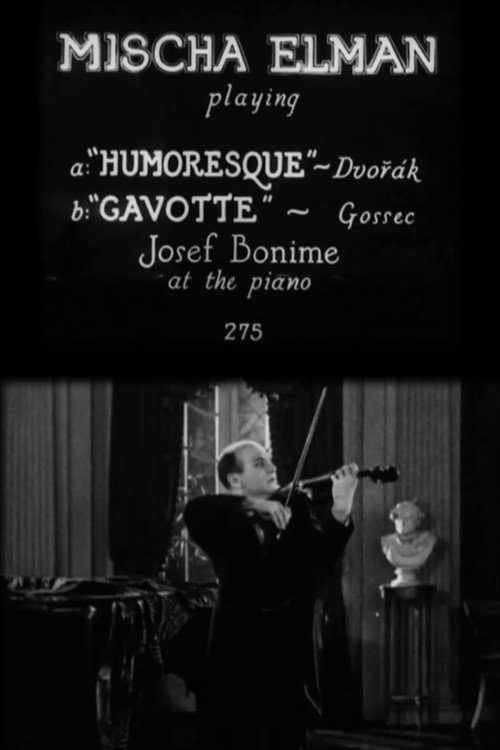
Violinist Mischa Elman performs a set of two of the most recognizable popular classic violin pieces: "Humoresque" composed by Antonín Dvorák, and "Gavotte" by François-Joseph Gossec. He is accompanied off screen by pianist Josef Bonime, although Bonime's instrument can be seen in the background behind Elman on screen. In one continuous single shot, the stationary camera focuses in squarely on Elman as he performs the two pieces.

An aspiring photographer and his bumbling assistant go to great lengths to take a picture of a beautiful actress whose wealthy husband does not want her photographed.
A convict is released, then lured back to prison, because he was pardoned by mistake.

Young Sybil visits her grandfather, a British Colonel stationed at a garrison in India, and she helps negotiate a diplomatic truce between him and the local natives.
Plot TBA. Described as a twisty, female-led thriller with pitch-black humor, set at a glittering destination for the ultra-rich.

A documentary about firemen and some of the spectacular blazes they fight.
This short tells the story of archery through the ages, mostly using Warner Brothers archive footage. Noted archer Howard Hill demonstrates his skills with various trick shots.

Veteran vaudevillian regales the audience with highlights from his comedy travel monologue and introduces "His Modern Art Choir," A Russian group he met while traveling in the Soviet Union who sing a traditional Russian song and an American standard.
Otto Ott owns and operates a summer garden, which is successful if only because they serve the largest beers in town for only 5¢ apiece. The problem is Otto's manager wife. Although they have been married only a year, to him it feels like an eternity. Mrs. Ott is the bane of all the waiters' existences, all of whom she fires. This situation causes a staffing problem for Otto. Otto's solution may lead to another problem for him at home, while Mrs. Ott's solution causes further problems for Otto, one which may not be entirely her fault.

The story of a much put-upon woman who becomes involved with a professor of political economy only to be thrown over by him for the daughter of a wealthy businessman.
Vaudeville act performed by husband and wife team Russ Brown and Jean Whitaker.

Travelogue by Andre de la Varre from 1952 that highlights key travel destinations throughout France, Italy, Spain, Austria and France.